

 Reboot and Revive


Category: Uncategorized
Inflammation and Mental Health
Does inflammation affect your mental health?
The effects of chronic inflammation on mental and emotional health can be so impactful on your life. Mental illnesses are not inflammatory disorders by themselves and nor does it mean that people with mental illnesses have elevated levels of inflammation in their body. It is a lot more complex than that. There are studies that show people with conditions such as depression that they have elevated inflammation in their bodies but high levels of inflammation is not necessarily a condition in people with more severe mental health conditions. The mechanisms of the effects of inflammation in the body and how the body becomes inflammatory is really involved and is unique to the individual’s make-up, surroundings and their lifestyle. It goes without saying that if you are living with inflammation, and living with pain, and having to cope with all of the inconveniences of how it affects your body, then there is no doubt that this will affect your mental health. There is also no doubt that it could become a vicious circle because if your mental health is affected, this has a profound affect on your body and this added stress in itself could increase inflammation. What I know for certain, from my extensive studies and my experience working with people, and understanding the complex relationship of the body, emotions and mental health when inflammation is present, is that diet and lifestyle are major factors in recovery. This is why the Eat Burn Sleep program that I created is proving successful in improving mental conditions.Case Study WIP
Diabetes Treatment with Diet
Losing sight of yourself and forgetting about what used to make you tick and feel joyful about is so common when the routine that you have done for years and years, suddenly isn’t there anymore. It could be that you have reached a certain age, responsibilities diminish i.e., the children leave for college or when you have decided to retire. A huge part of your daily life that was so consuming is suddenly not there anymore. You didn’t have a chance to think in those days and now, you have the time to think, yet you are filling up every moment doing nothing that makes YOU happy. And there’s a possibility that you have long running stress in your body and mind, which can leave you feeling slightly depressed. You may be wondering about your purpose in life, temporarily, at this time. Being older, you may have more physical concerns: a health condition that is flaring up in ways that have become challenging and leaving you with less confidence. You need a huge pick-me-up that is long-lasting. It feels like a miracle needs to happen, right? Paulina, 57, is a retired businesswoman from London Ontario. She had been in management for the retail industry for almost 40 years. Starting young, she had 23 years of running her own business and then 16 years working for a luxury retail company. Alongside her successful career, she was raising two girls while her husband travelled extensively with his job. Life was fun but stressful, as she tried to juggle all of it in order to have a comfortable and luxurious lifestyle. Fast forward and the girls grow up and leave home and Paulina continues to work hard. As their lifestyle became more comfortable, they purchased a condo in Miami and tried to visit every couple of months for a two week break. Those two weeks were so precious to her and her husband; the ocean breeze, warmth, daily swimming and the switch off from routine made her forget about the stresses of life. Being in Miami throughout the winter helped her re-energize in order to face the next couple of months back home, where winter was brutal. 8 weeks later, they would be back again and so on. It was at this time, during those two week breaks and on the flight home, she realised that she had lost herself. She couldn’t remember what she liked to do, what music she loved, food she really enjoyed, what made her heart sing – what made her feel good. She spent most of the time working hard and not switching off enough. She remembered that she used to continually feel excitement about making connections at work, activities and events, the children and their achievements and look forward to meeting friends for dinner. It was all wrapped up in a busy lifestyle but it was fun. It was hectic and she wouldn’t change it for the world. Wonderful memories. What did she feel now, though? That is just it. What does she feel? She has to dig deep trying to work out what would make her heart sing again. What did she have to do to bring some of that energy and joie de vivre back? She almost felt numb trying to jig a little enthusiasm up. She had always been on the go and now? She didn’t have financial worries, her family were well and she had the home in Miami and access to it every two weeks.Diabetes can Present itself later in Life
Visiting her doctor, she discovered that she had developed the onset of type 2 Diabetes and other conditions were creeping in. Deciding that it was a good time to retire, her two-week stays in Miami were not limited anymore and she could spend weeks enjoying the beautiful sunshine and hearing the ocean breeze to drift off to sleep at night. Having time to think about herself and explore her concerns about stress, diabetes, other small health issues and feeling low, she discovered Eat Burn Sleep’s anti-inflammatory diet and lifestyle program. Paulina hadn’t realised how stressed that she was, once she embarked on the program. Then with continuation and being guided through each day with movement, advice, recipes and full support, it helped her wind down, relax, eat well and enjoy life again. Paulina wrote: I recommend everyone finds an outlet to help relieve the stresses of daily life. Yalda, once I joined your lifestyle, it made me realise how stressed I have been as well as developing small health issues. I didn’t have serious conditions other the onset of type 2 Diabetes which I have managed to maintain due to your lifestyle program. My greatest pleasure was meeting YOU in Miami this past weekend. Thank you. What is diabetes? Is diabetes hereditary or acquired? How does diabetes happen? What are the symptoms of diabetes? Can you suddenly get diabetes? What food can cause diabetes? Can diabetes be treated later in life? Can my lifestyle affect diabetes? How can I manage diabetes? EBS Summary: EXPLAIN HOW THE PROGRAM WORKS FOR DIABETES, menopause, hormone imbalance possibility, sleep deprivation, MINDSET, MENTAL HEALTH, ENERGY, REMINDING YOU TAKE IT EASY, movement and meditation. One of the reasons why Paulina is managing her diabetes through the Eat Burn Sleep program is six week plan adopted as a lifestyle is ideal. People that are only on an insulin sensitisers medication will see excellent results. For glucose lowering drugs or insulin, they should receive counselling from their healthcare provider to coordinate the program with the medication taking, The plan is more targeted than paleo. It is designed to be super targeted when it comes to portion and food lists. You can be on paleo diet and eat cake all day and elevate your blood sugar levels. Food timing is important. What you put in your body when your stomach is empty, can have a huge impact on blood sugar levels and health in general. Younger, energised, flatter tummy Learning to love yourself and take your time. Self-nurture is so important. So often, with families and busy lifestyles, we can put our essential needs on the back burner and if it goes on for long enough, we can lose ourselves and burn out. It can leave you feeling depleted and lost. Inflammation loves a stressed body. What can also happen when we are busy, stressed and running around, we can reach out for sugary, starchy snacks. They are everywhere! This will play havoc with your sugar levels and inflammation and soon, diabetes can kick in. It happens because……… Weight loss happens as a side effect of following the program which also helps with many conditions. Depression lifts. Moods are elevated. Skin glows. Energy returns. No matter how busy you are. In fact, it will save you from burn out. If it doesn’t happen now, it sticks around and can appear later in life. We want to remind you that you are too important to leave out of the equation when you are looking after everyone’s needs. Vital nutrients can be lost with a busy lifestyle and as we get older, we need to be aware of conditions like osteoporosis, which presents itself in those that are living an unhealthy lifestyle (poor nutrition, smoking, sedentary) and on medication, like steroids. Also, to encourage you (no matter your age) to eat the right food, do the right exercise and follow advice that is backed by science and acclaimed by the medical profession. TWO LINKS – DETOX YOUR LIVER ONE VIDEO ONE RECIPECrohn’s disease
Crohn’s Disease
Being told that you have Crohn’s Disease; a chronic illness for which there is no cure, can be so hard-hitting and can feel like your life has just been crushed. We have some positive news for you. Your chronic illness can be eased and managed, with you in the control seat. Read on for more information.
What are the signs of Crohn’s Disease?
What does living with Crohn’s feel like?
How to get help with Crohn’s Disease
What different factors cause Crohn’s Disease?
What is the main cause of Crohn’s Disease?
Why is Eat Burn Sleep recommended for Crohn’s Disease?
What are the signs of Crohn’s Disease?
There can be an array of symptoms attached to your diagnosis of Crohn’s Disease, because of the chronic inflammation. Common symptoms of Crohn’s, because it causes GI (gastro intestinal) tract inflammation, includes severe diarrhea, blood in stools and anemia. As with all inflammatory bowel diseases, systemic symptoms outside the GI tract can occur alongside, ie., loss of appetite, weight loss, fatigue, night sweats, swollen joints, mouth sores, malnutrition and menstrual cycle disruption.
One of the symptoms that you could be experiencing, if you suffer from Crohn’s Disease is iron deficiency. It may be that you are having to go for regular iron transfusions just to keep your iron levels within the normal range. Many people have said that they were left feeling worried and upset with unexplained severe anemia whilst suffering with a digestive issue. Of course if your consultant has ruled everything else out, it is quite possible that anemia is contributing to the extreme fatigue that you are experiencing.
What does living with Crohn’s feel like?
If you are dealing with Crohn’s, it is quite likely that you have times when you are all fine one moment and then the next, you are wanting to head off for emergency treatment. The inflammation in your digestive tract, will no doubt be bouncing you around from severe diarrhea and exhaustion to excruciating pain and despair.
Living with Crohn’s will hit your emotions hard and will most likely have you canceling engagements, not making plans in general, anticipating attacks whilst doing regular activities like shopping. Not to mention, having to plan while being at school or visiting the office.
It is an inflammatory disease that just all in all, leaves you feeling uneasy and unrested. The exhaustion from the anemia assists with a feeling of depression and general lowness.
From the moment that you wake up, you are planning what to wear, what to eat and what escape routes can be incorporated into the day and all in all, you are exhausted before you get out of bed.
How to get help with Crohn’s Disease
Being passed around from pillar to post with appointments left right and center, methods, operations, drugs with side effects, trying complimentary medicines and treatments, without any real evidence of change can have you feeling like the disease is bigger than you are.
It seems impossible to believe, when you have tried every single method and all popular elimination diets, that a turnaround truly exists. What we know about this invisible illness, although it cannot be cured or got rid of, it can improve tremendously with an anti-inflammatory lifestyle.
The Eat Burn Sleep program is not a diet by itself, it is a lifestyle program. Devised by a person that was in your shoes with two autoimmune diseases and is now in remission. Not temporary remission but six years in remission.
We are firm believers in using all the tools we have for better health, both allopathic and natural medicine and strongly advise that you carry on consulting with your healthcare provider.
What different factors cause Crohn’s Disease?
What is the main cause of Crohn’s Disease?
How the Eat Burn Sleep program works is that it is focused on reducing inflammation in the body.
You may be interested in these articles:
Covid and inflammatory conditions.
Acid reflux.
The DANGERS of BUSY CULTURE for our MENTAL WELLBEING
 Modern culture often builds pressure to be constantly busy. We are expected to do more, to be more, to be always on the go. What we often do not realise is that such a lifestyle can actually make us less productive, and even cause mental health issues. I was inspired to film this video after a member on the 6-week plan asked me how to manage anxiety caused by this pressure.
IN THIS VIDEO, YOU WILL LEARN
- What are pockets of emptiness and why they are essential for mental health
- How to deal with unhealthy expectations created by social media
- What are the ways to free up space in your brain and to improve creativity
- Why you can often achieve more by doing less
- How to improve your mood in a sustainable way
NEW: The Eat Burn Sleep Podcast

I am happy to announce that the Eat Burn Sleep podcast is now live! A new episode will be added every other Sunday and each time I will invite inspiring people who have reached a level of excellence in their sector to share with us their experience and knowledge.
This week, my guest is Francesca White, health and beauty editor at Tatler Magazine and the founder and curator of the Beauty Triangle. The Beauty Triangle is an events platform aiming to create conversations that educate and empower women, connecting professionals and consumer audiences for beauty and wellbeing. The Eat Burn Sleep podcast is available on Spotify and on Apple Podcasts.
Your EBS Festive Recipes

The festive season is all about connection, joy, and coming together around the table. At Eat Burn Sleep, we believe food is so much more than fuel; it’s social, emotional, and deeply human. Sharing meals helps lower stress, support mental wellbeing, and calm the nervous system, all of which play an essential role in keeping chronic inflammation in check. This is why enjoyment and togetherness are just as important as what’s on your plate.
That’s where our 80/20 lifestyle truly shines. Instead of aiming for perfection, we focus on balance. When around 80% of your choices nourish your body with anti-inflammatory, gut-friendly foods, there’s plenty of room for festive favourites, flexibility, and traditions you love, without guilt or restriction. This gentle, sustainable approach supports hormone balance, digestion, and long-term health, while still letting you fully enjoy the season.
Below, you’ll find a festive recipe collection created to help you feel your best while celebrating, because looking after your health and enjoying special moments should always go hand in hand.
🥂 Appetisers

Austrian Cucumber Salad
Deviled Eggs
Kale, Apple and Pecan Salad
Sweet Potato Blinis
Waldorf Salad
Wild Salmon Spread (great with seed crackers)
🍗 Main Proteins

Rack of Lamb With Basil and Mint
Roast Chicken
Roast Christmas Chicken
Slow Middle Eastern Lamb Shoulder (great alternative to turkey)
🥕 Side Dishes

Brussels Sprouts, Chicken & Bacon Skillet (perfect for leftovers)
Brussels Sprouts with Pancetta and Sage
Creamy Beetroot Salad
Mashed Swede and Carrot
Roasted Carrots and Parsnips with Cumin Seeds
Roasted Root Vegetables
Roasted Sweet Potato and Garlic
Sweet Potato Mash
Sweet Potatoes with Rosemary and Sage
🍰 Desserts & Sweet Treats

Chocolate and Sea Salt Brownies *
Chocolate Mousse with Olive Oil
Chocolate Soft Cake
Cinnamon Oranges
Ginger Cookies
Healthy Cranberry Sauce
Healthy Dubai Chocolate Bar *
Healthy Hot Chocolate
Healthy Speculoos Biscuits
Invisible Apple Cake
Mandarin and Almond Cake *
Nutty Chocolate Bark *
Stewed Apples
🥣 Soups and Comfort Dishes

Cream of Broccoli and Zucchini Soup *
Parsnip Soup
Roasted Butternut Squash Soup *
Spinach and Zucchini Velouté
Zucchini and Leek Soup
🍞 Breads & Extras

Aioli Balsamic Dressing
Apple Cider Vinaigrette
Bread Rolls
Electrolyte Mix (before and after the celebrations!)
Green Salad Dressing
Honey and Mustard Dressing
Seed Bread
Pure Seeds Crackers
Recipes marked with * are public. Full anti-inflammatory guidance, education, and seasonal support are available inside the Eat Burn Sleep Membership.
As you enjoy these festive recipes, remember that health isn’t about restriction or missing out on moments that matter. The Eat Burn Sleep 80/20 lifestyle is about nourishing your body most of the time, and wholeheartedly enjoying food, connection, and celebration when it counts.
Cooking, sharing meals, and gathering around a table bring people together in ways that support digestion, reduce stress, and naturally lower inflammation. Food is joy, tradition, and community. Listen to your body, savour each bite, and trust that its consistency over time, not one meal or one week, that creates lasting health and balance.
How Does Sleep Help With Inflammation?

The Science Behind Sleep and Inflammation
Are you sleeping well? This is a question I ask my executive coaching clients, and the answer is frequently no! Modern life is full of things that disrupt sleep. Eating ultra-processed foods, scrolling social media, late-night Netflix, lack of exercise – it’s little wonder that people are struggling to sleep. And yet sleep is critical to health, especially if you are dealing with an inflammatory condition. So, how does sleep help with inflammation?Sleep and Inflammation
Your body does a great deal of cellular repair work while you sleep. If you don’t get enough sleep, this healing work is compromised. There are 4 stages of sleep in each sleep cycle, and we go through several cycles each night. Stage 1 is the first stage of non-REM (Rapid Eye Movement) sleep. It is a light sleep that lasts a few minutes as the body and brain start to relax and wind down. Stage 2 is the next phase of non-REM sleep during which our core temperature drops, muscles relax, and heart rate and breathing slow down. Stage 3 is deep non-REM sleep. This is the deep, restorative sleep that allows the body and mind to heal, repair, restore energy, and consolidate memories. This is the most important stage of sleep for optimum health and managing inflammation. Stage 4 is REM sleep. Brain activity picks up and we may experience vivid dreams. REM sleep is thought to be essential for healthy brain function and processing information. Studies show that sleep loss and disrupted sleep lead to raised levels of inflammatory mediators (Dzierzewski et al, 2020) which are linked to the development of chronic conditions and metabolic disorders like Type II diabetes and cardiovascular disease (Mullington et al, 2010).
In turn, the pain and discomfort of chronic inflammatory disorders can interrupt healthy sleep patterns, leading to a negative spiral of poor sleep and further inflammation.
Chronic low-grade inflammation is an underlying factor in so many conditions. From obesity and weight gain to depression, fertility problems, and thyroid issues, tackling inflammation is the secret to optimum health and vitality.
Studies show that sleep loss and disrupted sleep lead to raised levels of inflammatory mediators (Dzierzewski et al, 2020) which are linked to the development of chronic conditions and metabolic disorders like Type II diabetes and cardiovascular disease (Mullington et al, 2010).
In turn, the pain and discomfort of chronic inflammatory disorders can interrupt healthy sleep patterns, leading to a negative spiral of poor sleep and further inflammation.
Chronic low-grade inflammation is an underlying factor in so many conditions. From obesity and weight gain to depression, fertility problems, and thyroid issues, tackling inflammation is the secret to optimum health and vitality.
Sleep and Gut Health
At Eat Burn Sleep, we recognise just how vital gut health is for overall health and wellbeing. Your gut microbiome influences almost every aspect of disease and constantly communicates with your brain and immune system. Messenger molecules produced by gut microbes help to regulate your sleep-wake cycle, the internal 24-hour clock that determines when you are asleep or awake. If the balance of microbes in the gut is disturbed – we call this microbiome dysregulation – it can interfere with healthy sleep patterns and promote inflammation. These microbes also produce some of the neurotransmitters that help you sleep. For example, over 90% of serotonin is produced in the gut, and it is serotonin that converts to melatonin, the sleep hormone. GABA (gamma-aminobutyric acid) is another essential hormone. It has a calming effect on the central nervous system, helping you wind down and relax. If the microbiome is out of balance, it struggles to produce enough of these vital neurotransmitters.
Nutrition and Sleep: An Anti-Inflammatory Approach
The evidence is clear: an anti-inflammatory diet that supports a healthy and diverse gut microbiome is vital for managing sleep problems. The EBS program is acclaimed by healthcare professionals worldwide. Each stage of the program includes recipes, meal plans, exercise and movement videos, guided meditations, and access to health Masterclasses. We are a supportive community, here to help you eat well, sleep well, move well, and be well! This is what some of our members have to say:“It is an amazing platform that I joined in 2020! Well substantiated with research, it links a lot of illnesses to inflammation and has helped thousands of people to educate themselves and change their lifestyle, lose weight, and heal from various conditions! I always go back to her recipes, medication advice, and personalized advice. Her food lists are a great way to keep healthy. I love Yalda and EBS!” Joanna
“The EBS platform has been like a mentor, coach, and friend. Always by my side, whether it’s in my kitchen, on my exercise mat, during conversations with friends and family, or even during my walks. I smile every time I hear you say “Hello everyone” and know I’m in good hands. I have more energy and motivation, I’m less bloated, and I notice my emotions are less affected by my hormones. Your platform is easy to navigate and allows me to follow the lifestyle with relative ease.” KrisThe EBS program is proven to relieve a huge range of health conditions and can help you enjoy the deep, restorative sleep you need. Find out more about our membership options here. I recommend starting with the Six-Week Reset as the best way to begin your journey to better sleep, health, and vitality. Enjoyed This Article? You Might Like: Using Sounds to Calm Your Mind – on the Anti-Inflammatory Pioneer’s Podcast Worst Foods for Gut Health Sweet dreams, Yalda x
Does Cortisol Cause Weight Gain?
 You’ve probably heard of cortisol, the main stress hormone, but do you know how it affects your body? This powerful chemical messenger influences everything from digestion and mental health to sleep and immunity. But does cortisol cause weight gain? And how can you best manage this?
What Cortisol Does to Your Body
Cortisol is released from your adrenal glands whenever you are under stress. The stress we encounter nowadays is very different from what we experienced millions of years ago. Back then, it was woolly mammoths and saber-toothed tigers giving us stress! Now, we feel stressed out by busy traffic, credit card debt, and an overflowing inbox. However, the effect of stress on the body is the same. Your adrenal glands release adrenaline and cortisol, and you move into the “fight, flight, or freeze” response, which is part of the sympathetic nervous system. Cortisol has several main actions:- Raises blood sugar levels by breaking down sugar stores in the liver and muscles.
- Breaks down fatty acids and proteins for energy.
- Raises blood pressure.
- Diverts blood away from the digestive system so that more blood and oxygen are available to large muscles in the limbs to help you fight or flee from the source of stress.
Does Cortisol Cause Weight Gain?
One of the key signs of dysregulated cortisol levels is weight gain around the belly area. This is because cortisol promotes the growth and differentiation of fat cells. Visceral fat cells that lie deep within your abdominal cavity are much more sensitive to cortisol than fat cells that lie just beneath the skin (Duclos et al, 2012). So, higher cortisol levels encourage the fat cells in your belly and abdomen to grow much larger. Chronically elevated cortisol also interferes with the delicate balance of thyroid hormone activity. Thyroid hormones regulate your metabolism and play an important role in weight management. Thyroid dysregulation can lead to weight gain and difficulty losing weight.Signs and Symptoms of High Cortisol
Some of the common signs of chronically elevated cortisol include: Weight gain around the belly area. Fatigue. Difficulty falling asleep or staying asleep. Lowered immune response. Gut problems like Irritable Bowel Syndrome, bloating, indigestion, wind, constipation, and diarrhea. Headaches and migraine. High blood pressure (hypertension). Muscle tension. Brain fog, poor memory, and poor concentration.How To Get Rid of Cortisol Weight Gain
To get rid of cortisol-induced weight gain, you need to work on your diet and lifestyle. Just changing your diet alone will not be enough if you continue to feel stressed by work, family, finances, or other factors. You probably can’t make these problems disappear – most of us have to live with a certain degree of stress! – but you can change how you respond to them. The Eat Burn Sleep program will help you build resilience to stress and achieve a healthy weight balance. The meal plans, recipes, and food lists are designed to support blood sugar regulation and hormone health. These foods help you avoid blood sugar crashes (another form of stress!) and provide a balance of protein, fat, and the right kinds of carbohydrate to keep you energized between meals. Our meditation guides for morning and night help you switch from the sympathetic nervous system into the parasympathetic response. This side of your nervous system promotes healing and repair and the release of calming mood chemicals. Plus, our workout sessions help you stay strong and flexible without stressing your system and triggering more cortisol. It is important to keep active but exercising too intensely is another form of stress that must be avoided.This is what EBS member Sharon has to say about our program:
I feel the best in years, with a flat tummy and much less with bloating. I try to follow the program as much as possible and when socializing, I enjoy a few treats, then get back on the green food list. I’m slimmer around my middle and have a lot of energy. My joints feel so much better. I can tell I have less inflammation in my body. The workouts are great, and because they are short, I can always fit them into my day. I will be subscribing for another year in May, thanks Yalda for all your work, in helping yourself, you are now helping so many people. Would you like to experience the same benefits as Sharon? Now is the time to take control of stress, lose weight, and strengthen your resilience. Check out what’s on offer in our membership options here and begin your journey to optimum health. You might also like to tune into these podcast episodes: Using Sounds to Calm Your Mind Unstressable And dive into these articles: Heart Health: Do You Have a Heart Healthy Lifestyle? Depression, Anxiety, and Gut Health Wishing you peace and calm, Yalda xCan Diet Help Relieve Hay Fever?
 Spring is here which means seasonal allergies are too! Tree, grass, and weed pollen make life miserable for millions of hay fever sufferers every year, causing sneezing fits, sore throats, and stuffy noses. Antihistamine drugs may help but often have side effects like drowsiness. But what about food? Can diet help relieve hay fever?
What Is Hay Fever?
Hay fever, or seasonal allergic rhinitis as it is officially known, occurs when your immune system reacts to pollen from grasses, trees, flowers, and weeds. The pollen irritates the lining of your nose, eyes, and throat, causing immune cells to release histamine and other inflammatory chemicals. This leads to itching, swelling, and irritation. Typical hay fever symptoms include:-
- Sore throat.
- Tickly cough.
- Runny or blocked, stuffy nose.
- Itchy, watery eyes.
- Sneezing.
- Headache.
- Mucous in your throat.
When Is Hay Fever Season?
Hay fever season starts in late Winter / early Spring when the tree pollens appear. This is soon followed by grasses in late Spring and early Summer and weed pollen in Fall. Spring and Fall are often peak seasons for seasonal allergic rhinitis, although pollen levels vary according to your location and climate.Who Is Prone to Hay Fever?
Anyone of any age can suffer from hay fever. Some people grow out of their childhood hay fever and no longer experience any symptoms as an adult. Others develop it for the first time in their twenties or thirties, or even later. Many women start with seasonal allergic rhinitis and other allergies during menopause when hormone changes affect immune and gut health.How Long Does Hay Fever Last?
This varies from person to person. If you are only sensitive to one type of pollen, your symptoms will subside when that pollen level drops. If you are sensitive to several types of pollen your symptoms can potentially last from late Winter through to Fall.Why Is My Hay Fever So Bad All of a Sudden?
There are several reasons why seasonal allergies can suddenly get worse. Stress has a major impact on immune health. If you are under a lot of stress, your immune system may not work as effectively. Illness and infection can affect the membranes lining your nose and throat and leave you more sensitive to pollen. Location change. If you’ve moved to a different city or even a different part of the same city, the pollen levels may be higher than where you lived before. Air pollution from traffic fumes can make hay fever worse for some sufferers. Weather patterns affect pollen levels. A mild winter followed by a cool spring and a sudden burst of warmth in early summer can trigger a pollen burst that can worsen symptoms.Can Diet Help Relieve Hay Fever?
Yes! Adopting an anti-inflammatory diet and lifestyle can be hugely beneficial for managing seasonal allergic rhinitis. The clue here is in the name of the condition. The word “rhinitis” translates as “inflammation of the nose,” meaning the membranes lining the nose are inflamed. The Eat Burn Sleep anti-inflammatory diet and lifestyle program minimises inflammation by supporting gut and immune health. These two systems are intrinsically linked because so much of your immune system resides in the gut. Alongside these immune cells, your gut microbiome is also hard at work supporting immunity. It helps to regulate immune responses and inflammation and communicates with other microbiomes in the body, such as the oral and nasal microbiomes. Research shows that people with allergic rhinitis have an altered microbiome in the nasal passages which may be associated with inflammation (Chen et al, 2022). As we can’t micromanage individual bacteria within a microbiome, it’s important to create the right environment for beneficial species to thrive. Following an anti-inflammatory diet and lifestyle is the ideal way to do this. I suggest the 6-Week Reset as the place to start – it has all the meal plans, food lists, and guidance you need to begin your anti-inflammatory journey.Here’s what EBS Member Eleonora has to say about the program:
I’m in the sixth week of the Six-Week Reset and I cannot thank Yalda enough for the EBS lifestyle. During the last two years, I’ve struggled a lot with various issues like bloating, being overweight, psoriasis, thyroid malfunction, and acne, but now I’ve found the lifestyle that is the answer to all my problems. I finally started losing weight, changing my body composition, feeling energetic all day long, less bloated, fewer cravings in my PMS phase, and still counting the benefits! This lifestyle completely switched my body and my mind, and I cannot live without all the specialized advice I can find on the EBS platform anymore. Again, thanks Yalda for your great work! Want to know more about Eat Burn Sleep? You can take a sneak peek around the platform here and check out our membership options here.And you might also like to read:
The Anti-inflammatory Diet and Lifestyle Does Sleep Help With Inflammation? What is Gut Health? Here’s to a happy and healthy hay fever season, Yalda xHabit Stacking – The Key to Making Your Health Habits Last
 Have you heard of habit stacking? It’s a way of making positive changes to your life by adding a new habit to one that is already established. But is there any evidence behind this technique? And how do you get started?
What Are the Benefits of Habit Stacking?
Habit stacking is a popular method for supporting sustainable behavior change. The author S.J. Scott is credited with coining the term for his 2014 book Habit Stacking: 97 Small Life Changes That Take Five Minutes or Less. It is now recommended by health professionals all over the world, including the American Heart Association and the American Institute for Cancer Research. The habit stacking technique helps you embed new healthy habits into your daily routine in a manageable, sustainable way. Making changes to your diet and lifestyle isn’t always easy! Many people give up because they try to change too many things at once. This can feel overwhelming, especially if you already have a lot of demands on your time. It’s far easier to add one new habit at a time and attach it to something that is already part of your routine.How Do I Start?
First, make a list of all the changes you would like to make in your diet and lifestyle. Get everything down on paper – big ideas, small ideas – then highlight the ones that are most realistic for you right now. For example, you might want to run a marathon but realistically, you don’t have enough time for long training runs. However, you could fit in three shorter runs each week, so you could add that to your list. Once you have your ideas organized, decide which one is your top priority. This is the first one to stack. There are 3 ways to habit stack.- Pairing is when you add a new habit to a fun activity you already do. For example, if you plan to meditate more often, you could listen to a guided meditation while enjoying your morning coffee.
- Make a chain: Link your new habit to something you repeatedly do. Want to drink more water every day? Keep a small glass by your kitchen sink and top yourself up every time you wash your hands during the day.
- Sequence: Add your new habit to an established sequence of events. Think about the small routines you have every day, such as having a shower, cleaning your teeth, and getting dressed. Or coming home from work, getting changed, and having a snack.

What is the Evidence for Habit Stacking?
Scientists have known for decades about the benefits of habit formation for promoting health changes (Gardner et al, 2012). Making small, consistent changes that are linked to other external cues (i.e. other habits or behaviors) enables your brain to quickly form new connections in the areas associated with learning and behavior. This plays out in the research too. One study compared a control group with participants who were given simple diet and activity suggestions for weight loss. The group with the new habit suggestions lost an average of 2kg over 8 weeks compared to 0.4kg in the control group (Lally et al, 2008).Habit Stacking and the Eat Burn Sleep Lifestyle
The Eat Burn Sleep approach is perfect for habit stacking. Each part of the program comes with meal plans and food lists, plus recipes, guided meditations, movement videos, and health Masterclasses. It is designed with busy people in mind as I know only too well what it’s like to juggle work, family, and health issues. Too often our health is the thing that suffers and I don’t want that to happen to you. Here are some of the incredible, life-changing results our Eat Burn Sleep members enjoy…
“I have been following the EBS lifestyle and wanted to thank you for all your work in creating this program – it has been life-changing for me. I have ulcerative colitis, and I have never gone this long without a flare-up. I also travelled to America at the end of last month and for the first time in 5 months managed to travel without any bleeding. My other half has been following along with me and he has lost almost 2 stone in under 7 weeks. I can’t believe the improvements in my energy, sleep, and skin.” ClaireStart making your healthy habit ideas a reality today. Check out our membership options here and begin your journey to optimum health. You might also like to tune into these podcast episodes: Mindset Tips for Long-Term Health Finding Self Love And enjoy these articles: Financial Wellness with The Dura Society A Compilation of 5 Incredibly Nutritious Healthy Food items Happy habit stacking! Yalda x
Endometriosis: Which Diet Is Best?
 Are you one of the millions who suffer from the chronic inflammatory condition endometriosis? Do you struggle to know which diet is best?
The Office on Women’s Health estimates that 6.5 million American women aged 15-44 are affected by the condition. But with an average diagnosis period of 7 years, this figure is likely to be much higher.
There is currently no known cure for endometriosis and mainstream medical care focuses on hormonal contraceptives and surgical options. These methods fail to acknowledge the influence of food, movement, and lifestyle on hormone health. So, what is endometriosis, and which diet is best?
Are you one of the millions who suffer from the chronic inflammatory condition endometriosis? Do you struggle to know which diet is best?
The Office on Women’s Health estimates that 6.5 million American women aged 15-44 are affected by the condition. But with an average diagnosis period of 7 years, this figure is likely to be much higher.
There is currently no known cure for endometriosis and mainstream medical care focuses on hormonal contraceptives and surgical options. These methods fail to acknowledge the influence of food, movement, and lifestyle on hormone health. So, what is endometriosis, and which diet is best?
What is endometriosis?
Endometriosis is a chronic inflammatory condition where cells similar to the ones lining the womb (endometrial cells) grow elsewhere. They can grow anywhere in the body including the lungs, brain, bowel, bladder, and digestive tract. Each month these cells follow the same pattern as regular cells lining the womb. They grow, break down, and bleed. But unlike normal endometrial cells that leave the body via menstruation, the blood from these cells has nowhere to go. This can lead to the formation of painful cysts, scar tissue, and adhesions (tissue that binds organs together).What causes endometriosis?
Doctors still do not know exactly what causes endometriosis but there are several theories: Immune dysregulation: Immune cells fail to recognize and deal with the cells growing outside the womb. Genetic predisposition: Endometriosis can run in families and there may be a genetic heritability factor to the condition (Nouri et al, 2010). Retrograde menstruation: Menstrual blood may flow into other parts of the body and deposit womb cells.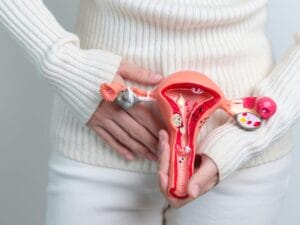
Symptoms of endometriosis
The main symptom of endometriosis is pain which can be felt in the pelvic area, the groin, the lower abdomen, and the lower back. Other symptoms include: Dysmenorrhea (menstrual cramps) Heavy or irregular bleeding Pain during sex Gastrointestinal disturbances such as bloating, constipation, diarrhea, nausea, and vomiting Pain when defecating Frequent urination and/or pain during urination The driving force behind these symptoms is chronic inflammation and excess amounts of estrogen, produced by the endometrial tissues (Bulan et al, 2019).
Dealing with “endo belly”
“Endo belly” is the tight, bloated abdomen endometriosis sufferers experience during their monthly cycle. It can be accompanied by pain, wind, or changes in bowel habits. The bloating may get worse just before a period when hormone levels peak. The best way of dealing with endo belly and the many other symptoms of endometriosis is through food and lifestyle changes. What you eat and how you live influences your hormone health every single day. If you want to drive down excess estrogen and be free of inflammation you need to live more harmoniously with your hormones.Which diet is best for endometriosis?
We believe the most effective approach for managing endometriosis is an anti-inflammatory diet that supports gut health and liver function. This approach addresses the underlying causes of endometriosis: Inflammation: Endometriosis is characterized by painful, inflammatory symptoms. A typical Western-style diet rich in ultra-processed foods and low in fiber and antioxidants will fuel this inflammation and make your symptoms worse. Estrogen excess: Estrogen needs to be detoxified through the liver and excreted via the gut. The gut microbiota contains a special subset of bacteria called the estrobolome which is responsible for processing estrogen. If the estrobolome is disrupted it can recycle old estrogen back into circulation, adding to the overall hormone imbalance. Jiang et al (2021) show that endometriosis is associated with gut microbiome disturbances which in turn lead to immune dysfunction and further inflammation. This two-way connection between endometriosis and the gut microbiome must be addressed with diet to help reduce inflammation and optimize microbial balance.Why the EBS diet and lifestyle is best for endometriosis
At EBS we believe in a whole-body approach to managing endometriosis. Our programs encompass foods, movement, and meditation, to support health holistically. The EBS platform is used and prescribed by healthcare professionals worldwide for endometriosis and other chronic inflammatory conditions. It treats inflammation at a systemic level, supports optimum hormone balance, and reduces pain where needed.This is what some of our EBS members with endometriosis have to say:
“Just finished Week One and I feel great already. The main reason I’m following the EBS lifestyle is suffering endometriosis. I lost 1kg on Week One and feel less bloated. Overall, I think mentally I feel better as well!!” Niloofar
“I have some great news that I wanted to share with you. My endometrioma finally started to shred one year after the diagnosis, and after joining the EBS, it was stable, and I thought it was never going to shred. In February 2022 it was down by 1.5cm, and now it is down by 2.5cm! I couldn’t believe my doctor! I thought that surgery was the only way to get rid of it! I am so happy that I finally see the healing. The brain is incredible. I believe reducing stress, body mobility, and whole foods are keys to sustainable health.” SafaeReady to be free from the pain and bloating of endometriosis? Join Eat Burn Sleep today and get started on your path to a pain-free life. Take a sneak peek around the platform here and check out our membership options here.